Hydrafacial vs Regular Facial: Core Differences
Hydrafacial relies on advanced technology for deep cleansing and hydration, while the other uses manual techniques for relaxation and maintenance.
Technology and Methodology
A Hydrafacial uses vortex-fusion technology to cleanse, exfoliate, and infuse your skin with hydrating serums.
This device-based process combines suction and fluid delivery to remove impurities while nourishing your skin at the same time.
It’s a controlled and consistent treatment that targets clogged pores and dryness without irritation.
A regular facial, also called a traditional facial, depends on the skill of your esthetician.
It uses manual extractions, exfoliating scrubs, and masks to refresh your skin.
| Feature | Hydrafacial | Regular Facial |
|---|---|---|
| Method | Device-based | Manual |
| Key Technology | Vortex-fusion | None |
| Focus | Deep cleansing and hydration | Cleansing and relaxation |
Treatment Steps and Experience
Main step of Hydrafacial: cleansing, exfoliation, extraction, and serum infusion.
The device gently vacuums out debris while pushing hydrating and antioxidant-rich solutions into your skin.
You’ll feel a light suction but no discomfort.
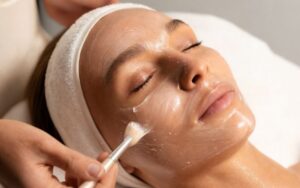
A regular facial starts with cleansing and exfoliation, followed by steaming and manual extractions if needed.
Then comes a mask, facial massage, and moisturizer.
Hydrafacials usually take about 30 minutes, while regular facials can last up to an hour.
Immediate Results and Downtime
You’ll enjoy the immediate results after a Hydrafacial—your skin looks cleaner, smoother, and more hydrated right away.
Because the process is gentle and non-invasive, there’s no downtime.
You can return to your normal routine immediately, even applying makeup the same day.
After a regular facial, your skin may appear refreshed but sometimes slightly red or sensitive, especially after extractions.
It may take a day or two to see full results.
Here is the thing you should know: regular facials offer gradual improvement with consistent sessions, while Hydrafacials provide faster visible changes with each treatment.
How Hydrafacial Works
Vortex-Fusion Technology Explained
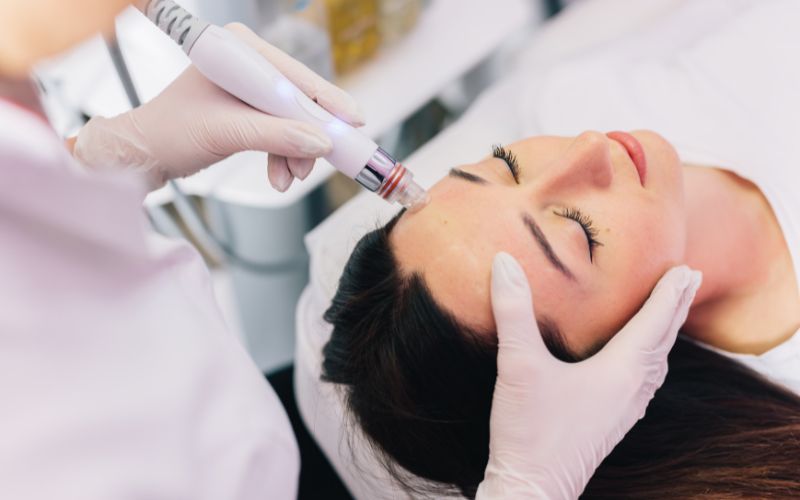
The Hydrafacial device uses vortex-fusion technology, which combines vacuum suction and a spiral-shaped tip to lift away debris while infusing skin with hydrating serums.
This technology ensures even application of products and consistent results across the entire face.
It also reduces manual pressure, making the treatment suitable for sensitive or acne-prone skin.
The device’s tip design helps deliver active ingredients like antioxidants, peptides, and hyaluronic acid deep into your skin.
This process supports hydration and helps improve skin texture and tone in a single session.
Customizable Serums and Boosters
One benefit of a Hydrafacial is how easily it adapts to your skin’s needs.
You can choose custom serums and boosters designed for concerns like dryness, fine lines, or uneven tone.
Common ingredients include peptides for firmness, antioxidants for protection, and hyaluronic acid for deep hydration.
These formulas work together to improve elasticity and brightness.
How Regular Facials Work

Manual Techniques and Steps
A regular facial usually begins with cleansing to remove dirt, oil, and makeup.
The esthetician then performs exfoliation, which may include a mild scrub or chemical peel to clear away dead skin cells.
Next, manual extractions remove blackheads or clogged pores.
This step needs careful pressure and precision to avoid irritation.
After extractions, a facial massage helps improve blood flow and relax facial muscles.
Finally, a customized mask is applied based on your skin type—hydrating for dry skin, clarifying for oily skin, or soothing for sensitive skin.
Variety of Facial Treatments
Regular facials can be customized in many ways.
Some include microdermabrasion, a light resurfacing treatment that smooths texture.
Others might combine chemical peels for deeper exfoliation or add LED light therapy for specific skin concerns.
You can also choose between classic facials for maintenance or targeted options for acne, dryness, or aging.
Each type still follows the same foundation—cleansing, exfoliation, and hydration—but uses different products or tools.
| Facial Type | Main Focus | Common Add-Ons |
|---|---|---|
| Classic Facial | General skin health | Massage, mask |
| Acne Facial | Oil control, clearing pores | Extractions |
| Anti-Aging Facial | Firmness, fine lines | Peels, serums |
Comparing Skincare Benefits
Deep Cleansing and Exfoliation
Hydrafacial uses a vortex-fusion device that deeply cleans pores while gently exfoliating your skin.
The tool removes oil, dirt, and dead cells without harsh scrubbing.
A regular facial relies more on manual techniques like steaming, extraction, and exfoliating scrubs.
These steps remove surface buildup and help your skin absorb products better.
Hydration and Radiant Complexion
Hydrafacial infuses your skin with hydrating serums that contain antioxidants and peptides.
These ingredients lock in moisture, giving your skin a plump, dewy look right after treatment.
Regular facials also hydrate your skin but rely on moisturizers and masks applied by hand.
Anti-Aging and Skin Improvement
Hydrafacial helps reduce fine lines and wrinkles by exfoliating dead skin and promoting collagen production.
The treatment’s serums can target issues like uneven skin tone, dark spots, and hyperpigmentation.
Regular facials also support skin improvement through massage and nutrient-rich masks.
Which Facial Is Best for Your Skin Type?
Sensitive and Acne-Prone Skin
If your skin gets red easily or breaks out often, HydraFacial is usually the gentler option.
It is not harsh scrubbing or manual extractions during the treatment.
Many HydraFacial treatments include salicylic acid, which helps control acne and prevent new breakouts.
Oily and Combination Skin
If your skin feels greasy in some areas and dry in others, you need balance.
A HydraFacial can help by deeply cleaning pores and removing excess oil without stripping moisture.
For stubborn oil or clogged areas, a regular facial with manual extraction may remove deeper impurities that machines sometimes miss.
Frequently Asked Questions
Can a Hydrafacial help with acne more effectively than a traditional facial?
A Hydrafacial can help manage mild acne by clearing pores and delivering hydrating ingredients that reduce oil buildup.
Traditional facials may work better for stubborn blackheads or inflamed acne because the esthetician can manually extract impurities and apply targeted treatments.
How often should I get a Hydrafacial compared to a regular facial for the best results?
You can get a Hydrafacial about once a month.
You can also schedule it every two weeks for ongoing maintenance.
Regular facials are usually done every four to six weeks.
What specific skin concerns does a Hydrafacial address that a regular facial might not?
Hydrafacial treatments target fine lines, uneven tone, and dehydration using antioxidant-rich serums.
It helps improve texture by removing buildup that dulls your skin.
How do the costs of Hydrafacial treatments compare to those of traditional facials?
Hydrafacials usually cost around $150 to $300 per session, depending on location and add-ons.
Regular facials range from $50 to $150 per session.