
Determin Your Skin Type
If you want results that address your unique concerns, the first and most crucial step is understanding your skin type.
Common skin types are generally categorized into 5 main types:
- Normal skin: Balanced oil production, few blemishes, smooth texture, and good elasticity.
- Oily skin: Excess oil, shiny T-zone, prone to blackheads, whiteheads, or acne.
- Dry skin: Low oil production, tightness, flakiness, dullness, and susceptibility to fine lines.
- Combination skin: A mix—oily T-zone + dry/normal cheeks.
- Sensitive skin: Easily irritated by products, weather, or stress; may feel red, itchy, or stinging; often paired with dryness.
What is Hydrafacial?
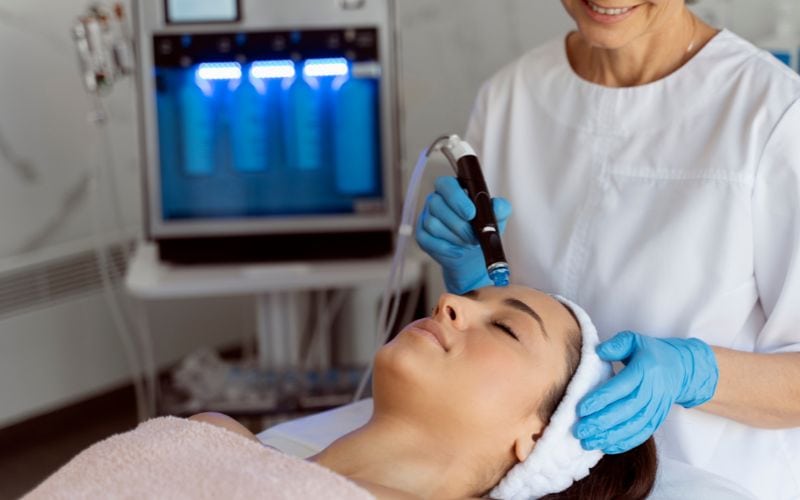
Hydrafacial is a non-invasive, multi-step skincare treatment that uses gentle exfoliation, hydration, and extraction to cleanse, nourish, and refresh the skin, addressing dullness, dryness, or mild congestion.
What is Chemical Peel?
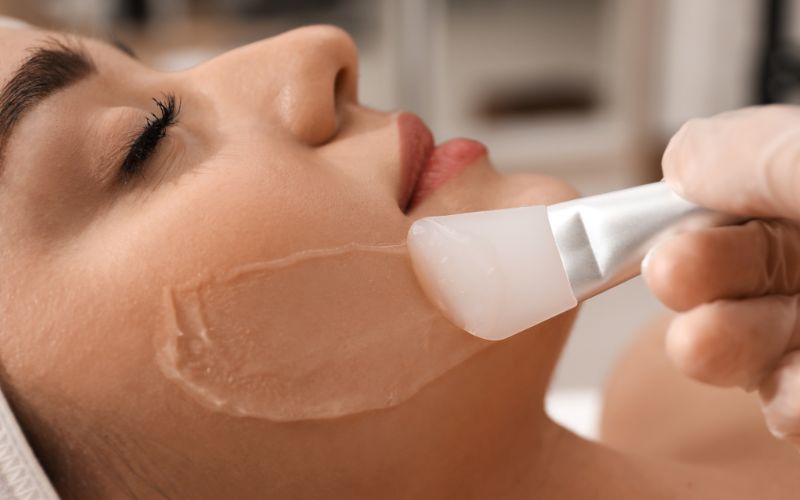
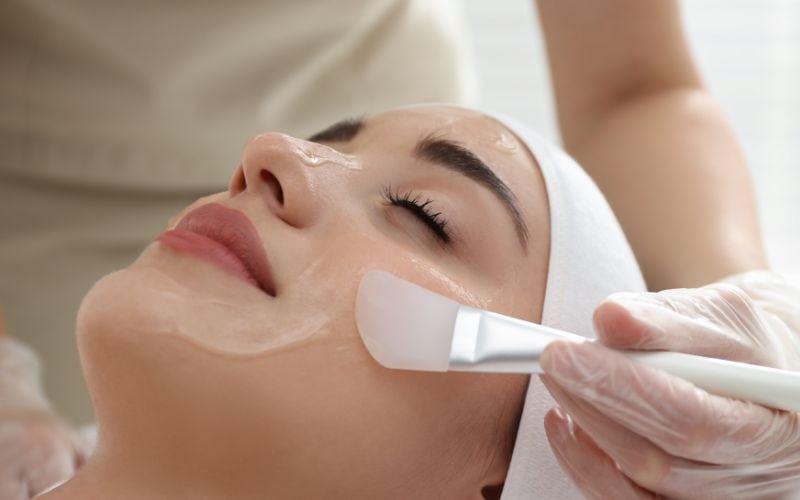
Chemical Peel is a treatment using chemical solutions to exfoliate the skin’s outer layers, promoting cell turnover to reduce fine lines, hyperpigmentation, or acne.
Types and Depths of Chemical Peels
Superficial Peels
Superficial peels are the gentlest option, targeting only the outermost skin layer.
They often use mild acids, like glycolic acid or lactic acid, to improve skin texture and tone gently.
You may notice brighter and smoother skin after just one session.
These peels require little to no downtime, making them ideal for regular skincare routines.
Medium Peels
Medium peels penetrate deeper into the skin compared to superficial peels, often using trichloroacetic acid (TCA).
These peels work to reduce fine lines, acne scars, and uneven skin tone.
They offer more significant results and are good for treating moderate skin issues.
However, you should consider that these peels may require multiple days off to allow your skin to recover fully.
Medium peels are usually done every few months for the best results.
Deep Peels
Deep peels provide the most profound transformation, reaching the lower layers of the skin.
Typically using stronger acids like high-concentration TCA or phenol, they significantly improve deep wrinkles, sun spots, and other severe skin conditions.
Expect more extensive peeling and longer recovery, possibly weeks.
Due to their intense nature, deep peels often require medical supervision and meticulous aftercare.
Key Differences Between Hydrafacial and Chemical Peel
|
Feature
|
HydraFacial
|
Chemical Peel
|
|---|---|---|
|
Best For
|
Improving overall skin health, hydration, and addressing minor issues like clogged pores and dullness.
|
Targeting significant concerns like deep wrinkles, sun damage, acne scars, and stubborn pigmentation.
|
|
Intensity
|
Superficial and non-invasive.
|
Can be customized from light to deep.
|
|
Downtime
|
None.
|
Varies from minimal redness to several days or weeks of peeling.
|
|
Ideal Candidate
|
Suitable for all skin type
|
Best for those with more significant skin issues
|
Difference in Mechanism
Hydrafacial uses a special device that gently vacuums out dead skin and dirt while infusing the skin with moisturizing serums.
This process supports instant glow and skin renewal without any irritation.
Chemical peels, on the other hand, use acids like glycolic and salicylic to exfoliate the skin at different depths.
This creates controlled skin damage, which encourages collagen production and cell turnover.
Results Timeline
Hydrafacial provides an immediate boost in skin appearance.
You can return to normal activities without any noticeable side effects.
Chemical peels may take several days to show visible improvements as the skin undergoes a peeling phase.
Superficial peels reveal results after a few days, while deeper ones may take longer, as they significantly enhance skin texture and tone over time.
Ideal Candidates and Skin Suitability
Sensitive Skin Considerations
If you have sensitive or rosacea-prone skin, Hydrafacial is a gentle option.
In contrast, chemical peels can be intense, especially the deeper ones.
Best for Acne and Congestion
Hydrafacial is great for unclogging pores and reducing mild breakouts since it uses a suction tool to remove impurities.
Chemical peels, especially those with salicylic acid, are effective for treating deeper acne and acne scars. Medium to deep peels can target cystic acne and help fade scars from past breakouts.
Addressing Pigmentation and Sun Damage
When you want to address pigmentation or sun damage, chemical peels can be very effective. Chemical peels can improve dark spots and uneven tone.
However, Hydrafacial can just brighten mild pigmentation.
In conclusion, Hydrafacial is a gentle, ideal choice for sensitive skin, mild congestion, and subtle brightening of mild pigmentation, while chemical peels excel at treating deeper acne, acne scars, and more significant pigmentation or sun damage—with the latter requiring consideration of its greater intensity.
Benefits and Limitations
Chemical Peel
Benefits: Effectively treats deep acne, acne scars, significant pigmentation, and sun damage; improves uneven skin tone by exfoliating deeper skin layers.
Limitations: Can be intense; high risk of irritation, redness, or sensitivity which is unsuitable for rosacea-prone and sensitive skin; requires longer recovery.
Post-Treatment Care: Avoid sun exposure, you should use SPF 30+ sunblock to protect your skin after the treatment; skip harsh skincare like scrubs and retinol; keep skin moisturized; avoid picking peeling skin.
Hydrafacial
Benefits: Gentle; unclogs pores, reduces mild breakouts, and brightens mild pigmentation; no downtime.
Limitations: Ineffective for deep acne, acne scars, or severe pigmentation and sun damage; results are subtle and temporary.
Post-Treatment Care: Use gentle, hydrating skincare; apply SPF daily cause the skin may be slightly photosensitive; avoid excessive heat like saunas and hot showers for 24 hours.
Combining Hydrafacial and Chemical Peel in a Skincare Plan
Hydrafacials deeply cleanse and hydrate your skin, providing immediate glow and smoothness.
This prepares your skin for the chemical peels that offer deeper exfoliation. Alternating these treatments can be especially advantageous if you have multiple skincare concerns, like acne and uneven texture.
Frequently Asked Questions
What are the benefits of a Hydrafacial compared to a chemical peel?
Hydrafacial is gentler, has zero downtime, and combines deep cleansing with hydration—unlike chemical peels that are more irritating, require recovery time, and focus mainly on exfoliation.
How often should I get a Hydrafacial or a chemical peel?
You can get a Hydrafacial every 2-4 weeks. On the other hand, mild chemical peels are best done every 3-4 weeks, while deeper peels should be spaced 6-8 weeks.
Can a Hydrafacial and a chemical peel be done during the same skincare routine?
Yes, it’s possible to include both treatments in your routine. You can start with a Hydrafacial before a mild chemical peel to prep the skin.
However, stronger chemical peels should be done separately to avoid any skin irritation.
What type of skin concerns are best treated with a Hydrafacial versus a chemical peel?
Hydrafacials are ideal for those with dry, dull, or sensitive skin looking for hydration.
Chemical peels work better for treating issues like acne scars, pigmentation, and deep wrinkles.
What’s the recovery time like for a Hydrafacial versus a chemical peel?
With a Hydrafacial, there’s no recovery time.
In contrast, chemical peels recovery time can take a few days to a week, depending on the peel’s strength.