A laser pigmentation removal machine can give an aesthetic clinic a focused way to serve suitable clients with dark spots, freckles and uneven tone, provided the clinic builds the service around careful assessment, trained operation and realistic follow-up. The device is one part of the investment; the consultation process and operating standard determine whether the service is responsible and sustainable. This guide explains how to assess the technology, compare supplier specifications and plan a pigment-focused service pathway.
Why Pigmentation Assessment Comes First
Clients often use one phrase, such as “dark spots,” for several visibly similar concerns. Sun spots, freckles, post-inflammatory hyperpigmentation, melasma and unexplained lesions can require very different decisions. An equipment purchase should therefore support a consultation-led workflow with clear client expectations.
Before treatment, the operator should record the client’s skin history, skin tone, pigment history, sun exposure, skincare routine, medication, recent procedures and expectations. The consultation should also establish whether the client has previously experienced irritation or rebound pigmentation. Suspicious, changing, raised, bleeding or unexplained lesions require medical evaluation. They should never be presented as a routine cosmetic treatment case.
Melasma deserves particular caution. It can be influenced by hormones, ultraviolet exposure, heat, inflammation and individual skin characteristics. A clinic needs a defined protocol for candidacy, referral and follow-up, because a poorly selected or overly aggressive approach can aggravate visible pigment. Clear screening also protects the client experience: people appreciate a provider that explains suitability, limits and home care before proposing a session.
How Q-Switch Laser Equipment Works
Q-switch laser systems deliver energy in short pulses. In a suitable, professionally assessed case, this approach is used to target pigment while limiting the time available for heat to spread into nearby tissue. A clinic should connect this basic principle to its practical decisions: which concerns it is permitted and trained to address, which skin types it serves, and when it refers a client elsewhere.
Common wavelength options include 1064 nm and 532 nm. Their relevance depends on pigment depth and color, the client’s skin type, the machine’s approved indications and the operator’s training. Wavelength labels alone do not establish that a service is appropriate. The supplier should explain how the device is intended to be used and provide a complete operator manual, safety information and support for the clinic’s market.
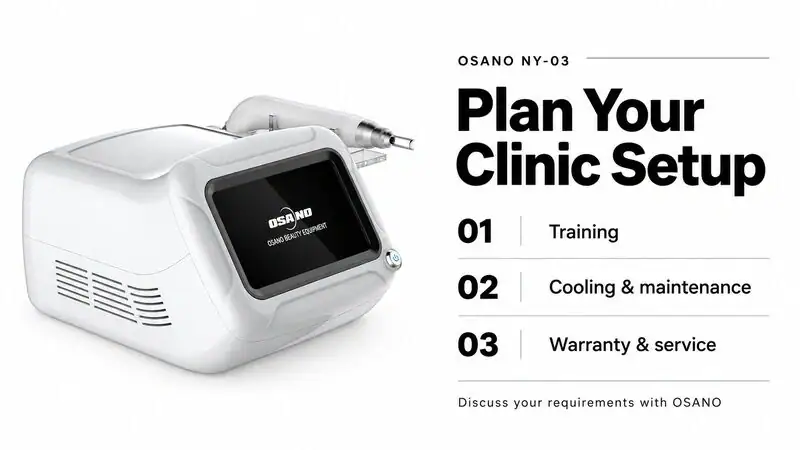
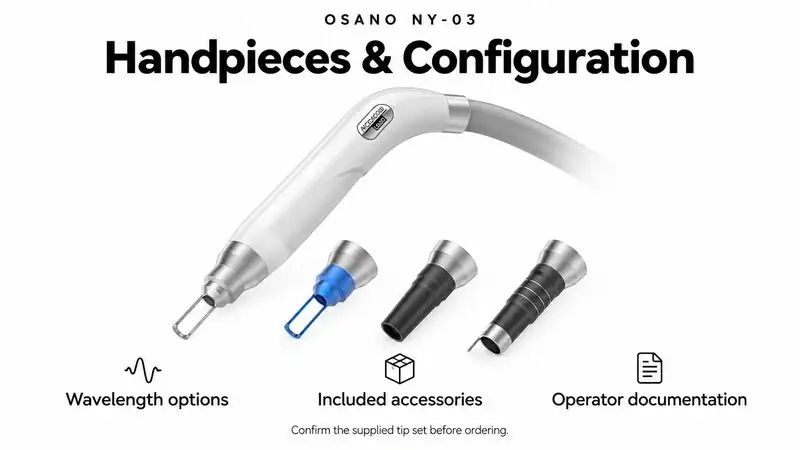
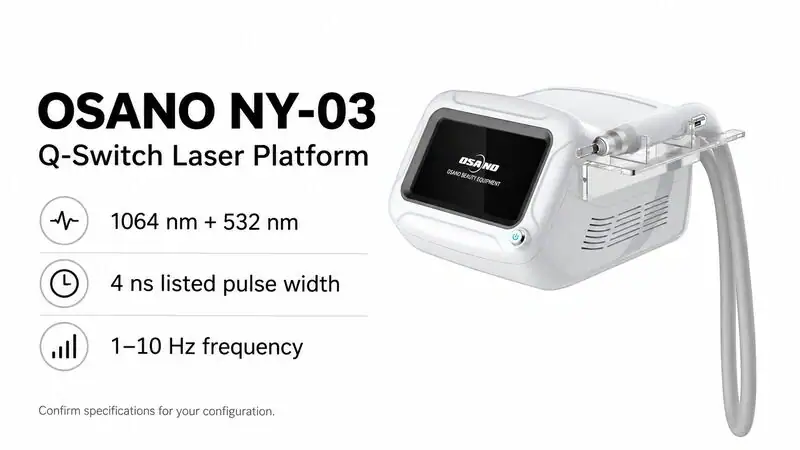
The OSANO NY-03 Q-Switch Pigmentation Removal Machine is an example of a compact platform positioned for pigment- and tattoo-related service categories. Its listed configuration includes 1064 nm and 532 nm treatment tips, a carbon tip, a 4 ns pulse width, 1-10 Hz frequency, red aiming light and air-plus-water cooling. Use these published specifications as a starting point for supplier discussion, confirmation and local compliance checks, then establish protocols according to the supplied documentation and local requirements.
How Pulse-Duration Claims Should Be Evaluated
Picosecond systems are designed to deliver shorter pulse durations than conventional nanosecond Q-switch systems. This distinction can change how energy interacts with pigment particles, and it is frequently used to position equipment as a premium option. Buyers need to verify the actual pulse duration and quoted configuration instead of relying on terms such as “Pico” in a product name.
Ask the supplier to document the pulse duration, energy range, frequency, available wavelengths, spot sizes, handpieces, aiming system, cooling approach and replacement-part process. Request the documentation and certification relevant to your destination market. If the supplier uses terms such as pico, Q-switch or fractional lens technology, ask exactly what component or mode carries that specification. A clear answer makes it easier to train staff, set suitable expectations and compare quotations fairly.
Choose Equipment for Your Service Model
A reliable Q-switch platform may suit a clinic entering the pigment and tattoo-related laser category with a limited initial equipment budget. A shorter-pulse platform may suit an established clinic that already has trained laser staff, documented demand and the operational capacity for a premium service. The appropriate choice comes from the clinic’s client base, staff competence, regulation, room setup, maintenance plan and post-treatment support.
Begin with the service menu you can safely deliver. Map the client journey from assessment to consent, session preparation, aftercare and review. Then select the equipment specification that supports that workflow. This approach prevents a costly mismatch between a device’s sales presentation and the clinic’s actual capability.
Laser Machine Features to Compare
Clinical control and usability
Review wavelength options, verified pulse duration, energy and frequency ranges, spot-size options, aiming beam and handpiece design. The screen and control layout should allow trained staff to work confidently within the manufacturer’s instructions. Ask how the system supports repeatable parameter documentation and how the clinic will store treatment records.
Cooling and room workflow
Cooling design affects both session flow and maintenance planning. Confirm whether the machine uses air cooling, water cooling or both; identify water-change requirements, cleaning steps and any consumables. Evaluate the handpiece storage position, cable or hose routing, trolley footprint, electrical requirements and ventilation needs in the actual room. A compact device still needs a deliberate, uncluttered operating environment.
Reliability and supplier support
Ask about expected lamp or component life, warranty terms, replacement parts, remote troubleshooting, repair turnaround and the route for future servicing. For the OSANO NY-03 listing, the stated lamp life is more than 1,500,000 shots and maximum energy is 2000 mJ; buyers should confirm the exact configuration and written warranty supplied with their order. Request training materials and clarify who will train new staff after the initial installation.
Build a Safe Pigmentation Service Pathway
A strong service begins with consultation and candidacy screening, followed by informed consent, documented planning and a session conducted only by appropriately trained professionals. The clinic should have clear policies for contraindications, protective eyewear, room controls, incident escalation and medical referral. Local laws and the device’s approved indications define the clinic’s working boundaries.
Aftercare belongs within the service pathway. Give clients clear, treatment-specific guidance on sun avoidance, broad-spectrum sun protection, gentle skincare, expected temporary sensitivity and the circumstances in which they should contact the clinic or seek medical advice. Schedule follow-up when the provider’s protocol calls for it. This helps staff monitor tolerance and helps clients understand that pigment management may be a gradual program with several appointments.
Marketing should match this standard. Describe professional assessment and technology-led care for suitable pigmentation concerns. Avoid guarantees that freckles, melasma or dark spots will be removed. Transparent language supports trust, protects brand reputation and attracts clients who value informed care. For broader purchasing context, clinics can also review this Q Switch Pigmentation Removal Machine – OSANO.
Laser Pigmentation Removal Machine FAQs
What pigmentation concerns can a Q-switch laser machine address?
A Q-switch laser machine may be considered for selected pigmentation concerns such as freckles, sun spots and some other visible pigment changes when device documentation, professional assessment and local rules support that use. A changing, raised, bleeding or unexplained lesion requires medical evaluation.
Is laser treatment suitable for melasma?
Melasma requires particular caution because hormones, heat, ultraviolet exposure and inflammation can affect it. Suitability, device choice and follow-up should be determined by an appropriately qualified professional using a documented protocol.
What should clinics confirm before buying a pigmentation removal machine?
Confirm the exact model, pulse duration, wavelengths, energy range, included handpieces, electrical requirements, training, warranty, service process, documentation and regulatory requirements for your market before placing an order.
Plan the Commercial Case
Pigmentation concerns can support repeat consultations, treatment plans, maintenance appointments and appropriate skincare recommendations. The return on equipment depends on more than the purchase price. Include staff training time, room preparation, consumables, maintenance, marketing, consultation capacity, insurance and after-sales support in the calculation. Start with accurate demand estimates and a service menu your team can sustain.
Set practical operating targets before launch. Estimate how many consultations your team can schedule each week, how much time is needed for room turnover and how often each staff member needs supervised training refreshers. Track enquiry-to-consultation conversion, suitable-candidate rate, completed treatment plans, rebookings and service interruptions. These measures show whether demand, staffing and equipment uptime support the financial model. They also reveal when the clinic should adjust appointment length, invest in additional training or postpone an expansion of the menu.
Before requesting quotations, prepare a simple supplier checklist: required wavelengths and functions; confirmation of actual pulse specification; electrical compatibility; included accessories; training scope; warranty; service contacts; lead time; documentation; and total landed cost. Comparing these items in writing is far more useful than comparing headline power numbers alone.
How to Choose the Right Laser Pigmentation Removal Machine
The right laser pigmentation removal machine is a platform that fits your clinical scope, staff skill level and long-term service model. Prioritize verified specifications, appropriate training, clear safety procedures, dependable service and honest client communication. With these foundations in place, a pigmentation service can become a credible, carefully managed addition to an aesthetic clinic. Looking for a reliable pigmentation removal laser supplier? Partner with OSANO. Contact us to discuss the NY-03 configuration, training and support for your market.