
If you want smooth skin and are tired of shaving or waxing, you may be thinking about long-term hair removal. Two of the most popular options are laser hair removal and electrolysis. Both treatments can reduce or remove unwanted hair, but they work differently and have different results.
What Is Laser Hair Removal?
Laser hair removal is a popular method for long-term reduction of unwanted hair. It targets the hair follicle with light energy, offering quicker treatments compared to other methods, especially for large areas.
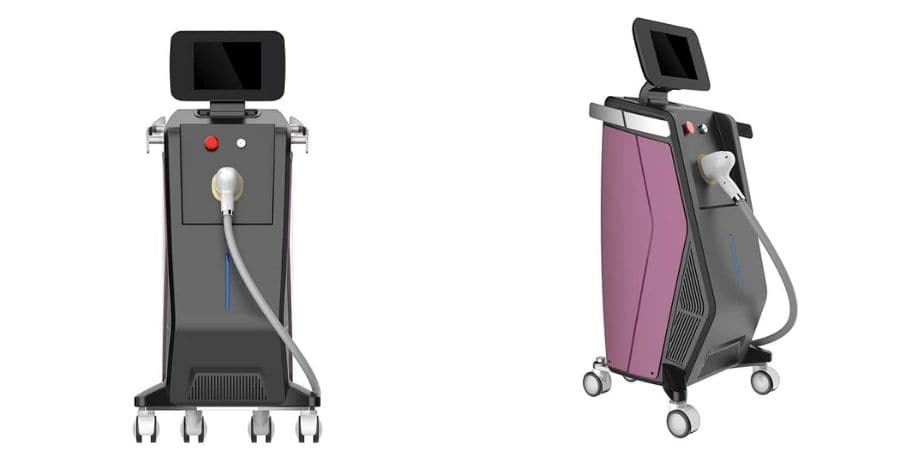
How Laser Hair Removal Works
Laser hair removal uses a focused beam of light to target melanin (the pigment) in the hair. This light passes through the skin and is absorbed by the hair follicle. The heat from the laser damages the follicle, which helps prevent future hair growth.
You usually need several sessions spaced a few weeks apart because hair grows in different cycles. The treatment is most effective on people with dark hair and light skin because the laser easily targets the pigment without affecting the surrounding skin. People with darker skin types can still get laser treatments, but special lasers are sometimes needed to avoid skin damage.
Benefits
Laser hair removal is known for its speed and accuracy, especially on larger body areas like the legs, back, or chest. Each pulse of the laser treats multiple hairs at once, so sessions are often quick. Many people notice a major decrease in hair growth after only a few sessions.
The results are long-lasting. Laser hair removal allows you to target nearly any part of your body, including the face, underarms, bikini line, and arms. It’s also precise, damaging only the hair follicle and leaving most skin unharmed.
Risks
Laser hair removal is considered safe when done by a trained professional, but there are some risks. The most common side effects are redness, swelling, or mild discomfort that may last a few hours or days. Less often, changes in skin color can happen. This is more likely if you have a darker skin type or if you tan before or after your treatment.
Rare risks include blistering, scarring, or burns if the treatment is not done correctly.
What Is Electrolysis?
Electrolysis is a permanent hair removal method approved by the FDA. It targets each individual hair follicle using a fine probe, making it suitable for almost all hair and skin types.
How Electrolysis Works
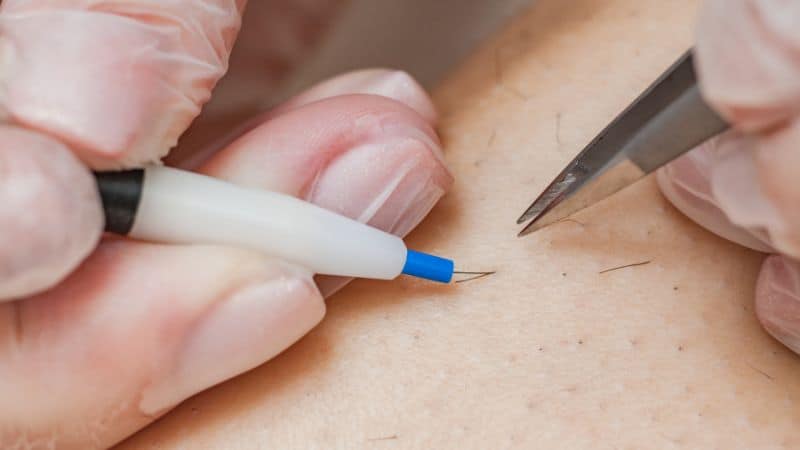
During electrolysis treatments, a trained electrologist inserts a very thin needle into the opening of each hair follicle.
A small electric current passes through the needle. This current destroys the growth center of the hair, known as the root or bulb.
There are three main types of electrolysis: galvanic, thermolysis, and blend. Each uses a different way to damage the follicle, but all aim to stop new hair from growing.
Each treatment session can last from 15 minutes to over an hour. You may need several sessions since only actively growing hairs can be treated effectively at one time.
Electrolysis works on all hair colors and skin tones, unlike laser hair removal. It’s often used on small areas like the upper lip, chin, eyebrows, or fingers.
Benefits
- Permanent Hair Removal: Treated hair follicles typically do not grow hair again.
- Suitable for All Skin and Hair Types: Whether your hair is light, dark, fine, or coarse, electrolysis can work for you.
- Precision: It is ideal for areas needing detailed work, such as the face or shaping eyebrows.
- No Long-Term Maintenance: After enough sessions, you do not need to repeat treatments.
- No Influence from Hair Color: Unlike laser hair removal, electrolysis does not rely on pigment, so people with gray, blonde, red, or very fine hair can benefit.
Risks
Most people experience temporary redness, swelling, or mild discomfort in the treated area.
Less common risks include scarring, darkening or lightening of the skin (hyperpigmentation or hypopigmentation), and rarely, infection if aftercare instructions are ignored.
What Are The Key Differences Between Laser Hair Removal & Electrolysis?
As it mentioned in the previous section, laser hair removal uses focused light to target the pigment in your hair, while Electrolysis uses a tiny electric current to destroy the hair root directly. Here’s a comparison table for a clearer visual difference.
Table: Quick Comparison
| Feature | Laser Hair Removal | Electrolysis |
|---|---|---|
| Applicable People | Best for dark hair, light skin | Any hair and skin color |
| Target Area | Big areas like the legs or back | Small spots |
| How It Works | Light, heats pigment | Electric current |
| Speed | Faster | Slower |
| Pain Level | Mild to moderate | Moderate to more painful |
| Sessions Needed | Several, 4–8 on average | Many, often more required |
| Results | Long-term reduction | Permanent removal |
Laser Hair Removal vs. Electrolysis: Which One Is Better?
Laser hair removal is best if you want to target large areas like your legs or back. It works quickly on multiple hairs at once.
If your main concern is permanent hair removal, electrolysis is your best choice.
If you want quicker results with permanent reduction on bigger areas, laser hair removal may be more suitable.
Pain and cost can also be a factor. Laser treatments are usually less painful and less expensive for big areas. Electrolysis may take longer and cost more in the long run for large zones.
Frequently Asked Questions
Can electrolysis and laser hair removal be used effectively for PCOS-related hair growth?
Both methods are used for PCOS-related hair growth. Laser hair removal can quickly reduce hair in areas with lots of growth. Electrolysis works for all hair colors and types, including fine or light hair that laser may not address. You may need regular treatments with either method due to ongoing hormonal changes.
Which method is more suitable for facial hair removal: electrolysis or laser?
Electrolysis is reliable for all facial hair types, even light or gray hairs. It is often recommended for smaller areas like the upper lip or chin. Laser hair removal can be faster if you have dark, coarse hair and fair skin, but may not work well for light-colored or very fine facial hair.
How does skin tone affect the results of electrolysis and laser hair removal?
Laser hair removal works best when there is a strong contrast between hair and skin color, such as dark hair on light skin. It may be less effective or riskier on darker skin. Electrolysis does not rely on hair or skin color, so it is safe and effective for all skin tones.