Laser and light technologies can help clinics build services for less familiar skin concerns, but each service needs a diagnosis-led pathway, suitable equipment, trained operators, and clear limits. Cold sores and underarm darkening show why the same word “laser” can refer to very different clinical decisions.
This guide explains how to respond to demand for laser cold sore treatment and underarm whitening laser treatment while protecting clients and expanding a responsible skin-service menu.
Start With Diagnosis Before Laser Treatment
Clients often describe a symptom with a treatment term they found online. A request for “whitening,” “spot removal,” or “cold sore laser” does not identify the underlying condition. The first clinic task is to establish whether the concern belongs within the practitioner’s scope and whether treatment should proceed, pause, or move to a medical provider.
Darkening can follow friction, shaving, deodorant irritation, folliculitis, eczema, previous procedures, medication, hormonal changes, or an underlying condition. Blisters around the mouth may reflect herpes simplex, angular cheilitis, contact dermatitis, an ulcer, or another lesion. A structured consultation helps the clinic avoid using an aesthetic laser on a concern that requires diagnosis or prescription care.
Clinics can strengthen this pathway with intake questions, visual assessment, documented consent, photography rules, contraindication checks, patch-test criteria, and relationships with dermatology or medical providers. Painful, blistering, infected, rapidly changing, unexplained, recurrent, or eye-adjacent symptoms should trigger prompt medical review.
Laser Cold Sore Treatment Requires Medical Oversight
Cold sores are commonly caused by herpes simplex virus, often HSV-1. They can produce tingling, pain, and fluid-filled blisters around the lips. The American Academy of Dermatology describes antiviral medication as the standard medical treatment and recommends medical care for severe, frequent, prolonged, eye-adjacent, or high-risk cases.
The search phrase laser cold sore treatment appears because some dental and medical practices discuss low-level laser or other light-based approaches as supportive care. Evidence, devices, scope-of-practice rules, and protocols vary. A clinic should present this service only when the technology has a documented indication, the operator has the required qualifications, and an authorized medical protocol governs assessment and follow-up.
Screen Active Lesions Before Aesthetic Procedures
An active or suspected cold sore should prompt postponement of elective facial procedures around the area. Resurfacing, hair removal, peels, microneedling, massage, and other treatments may increase irritation or complicate healing. Staff should record the concern, explain the delay clearly, and direct the client to an appropriate medical professional.
Useful screening questions cover onset, tingling, blistering, recurrence, previous diagnosis, antiviral medication, immune status, eye symptoms, and recent facial procedures. This process creates value even when the clinic does not provide laser cold sore treatment. Clients receive a safer route and understand why rescheduling protects them.
Use Accurate Cold Sore Marketing
Marketing should describe the clinic’s assessment and referral process before describing technology. HSV remains in the body after a visible outbreak resolves, and cosmetic marketing should avoid cure claims, guaranteed healing times, or promises about recurrence. Qualified providers offering supportive laser care should state the device, professional scope, purpose, limitations, and medical pathway clearly.
For an aesthetic clinic, education can be the main service contribution. A page answering questions about laser cold sore treatment can explain screening, postponement, medical referral, and safe return to elective services without turning an active viral lesion into a casual beauty add-on.
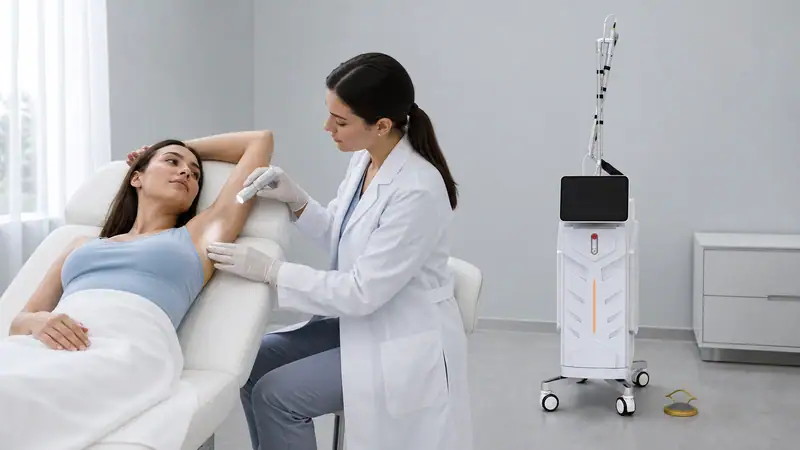
Underarm Whitening Laser Treatment Starts With Assessment
Demand for underarm whitening laser treatment often comes from clients who want a more even-looking tone after shaving, friction, ingrown hairs, deodorant reactions, or previous inflammation. Professional consultation should translate “whitening” into a specific concern such as visible hyperpigmentation, recurring irritation, unwanted hair, or uneven texture.
Underarm darkening can also accompany acanthosis nigricans, which often affects body folds and may be associated with an underlying condition. Thickened, velvety, sudden, extensive, itchy, or unexplained changes deserve medical assessment. A clinic should define referral criteria before adding an underarm pigmentation service.
Review Skin Type and Irritation Triggers
Consultation should document Fitzpatrick skin type, previous pigment changes, tendency toward post-inflammatory hyperpigmentation, shaving and waxing habits, deodorant use, ingrown hairs, folliculitis, eczema, medications, current products, and past laser experience. The skin should be intact and free from active irritation or infection before an elective procedure.
Patch testing may be appropriate for the selected device and protocol. Energy, wavelength, pulse duration, spot size, cooling, treatment interval, and operator technique all influence risk. Published reviews show that laser and light treatments may help selected axillary hyperpigmentation cases, while outcomes vary and pigment can worsen after energy-based procedures. Informed consent should cover both potential improvement and pigment-related adverse effects.
Match the Technology to the Cause
A pigment-focused Q-switched or picosecond platform may be considered for selected pigmentation cases under an appropriate professional protocol. A hair-removal laser may serve a different goal by reducing repeated shaving and the irritation that follows it. IPL, topical care, calming services, or a combined plan may be more suitable for other clients.
The name underarm whitening laser treatment should therefore describe a consultation topic, not one preset machine setting. The practitioner must identify the target, choose a device with a documented use, and adjust the plan to the client’s skin and history. Professional wording such as “underarm tone-evening” or “underarm pigmentation assessment” sets a more realistic expectation.
Add Other Specialized Skin Services Carefully
The same assessment model can support other less familiar but frequently requested concerns. Examples include post-acne marks, shaving-related discoloration, ingrown-hair support, visible sun spots, uneven-looking tone, and post-procedure calming. Each service should have a defined concern, suitable client profile, exclusion criteria, technology choice, aftercare plan, and referral boundary.
These services broaden the menu without forcing every concern into the same treatment. A pigmentation pathway may lead to a Q-switched platform, while a shaving-irritation pathway may lead to hair reduction and barrier-support care. A suspicious lesion, open wound, active infection, or unexplained rash belongs in a medical pathway.
Clinics can organize the menu around client questions: What is causing the visible change? Is the skin calm enough for treatment? Which technology addresses the target? What is the risk of post-inflammatory pigment change? Which provider should manage the case? These questions make a niche service understandable and repeatable.
Choose Equipment for Diverse Skin Services
Equipment selection should follow the planned service menu. Buyers should request written information about wavelength, pulse width, energy range, frequency, spot size, cooling, intended uses, contraindications, skin-type guidance, eye protection, training, maintenance, warranty, replacement parts, and regulatory documentation.
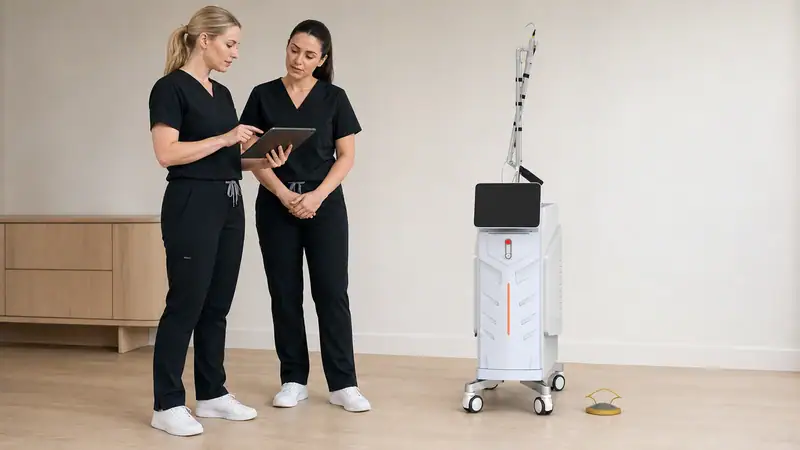
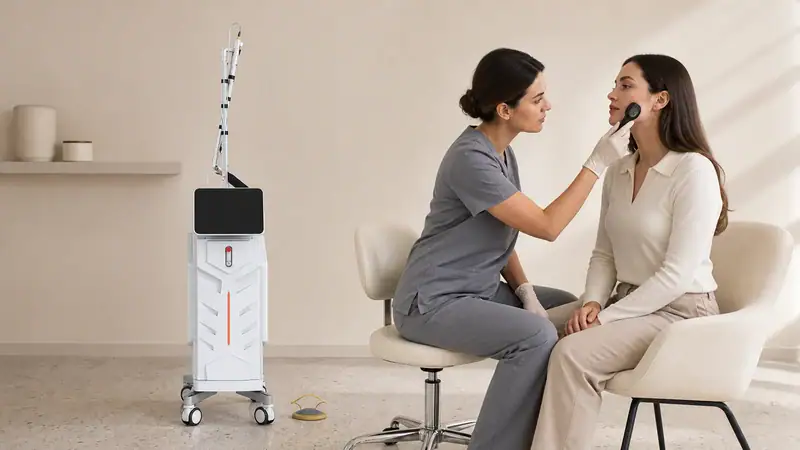
For pigmentation-focused planning, the OSANO PC-40 picosecond laser platform provides one example to review. Its official page lists 532 nm and 1064 nm wavelengths, 2000 ps pulse width, a Korean articulated arm, and a 12.1-inch screen. Clinics should verify the exact configuration, approved indications, local device requirements, and operator qualifications before adding any service.
The PC-40 product information focuses on pigment, tattoo, and skin-rejuvenation applications. It should not be represented as an HSV treatment system without separate documentation that supports that use. A request for laser cold sore treatment belongs in the medical protocol review, while underarm whitening laser treatment belongs in the pigmentation and irritation assessment pathway.
Evaluate Training and Daily Workflow
Training should cover skin typing, target recognition, consultation, contraindications, patch testing, treatment settings, endpoint recognition, eye safety, infection control, documentation, aftercare, adverse-event response, and referral criteria. A feature-rich machine creates value only when staff can apply a consistent protocol.
Ask the supplier to demonstrate startup, parameter selection, handpiece handling, cooling, cleaning, shutdown, routine maintenance, and troubleshooting. Confirm which consumables and replacement parts are required and how technical support is delivered after installation.
Build Safe Client Pathways
A specialized service becomes easier to manage when the clinic maps each step. The pathway can include inquiry screening, consultation, medical referral triggers, patch testing, informed consent, treatment, aftercare, follow-up, and documentation of outcomes or adverse reactions.
For cold sore inquiries, the pathway should prioritize active-lesion screening and medical care. For underarm pigmentation inquiries, it should identify irritation triggers, underlying conditions, skin type, target pigment, and the most suitable treatment category. Clear pathways help reception staff, practitioners, and medical partners give consistent answers.
Market Specialized Laser Services Responsibly
Informational content should answer the questions clients ask before a booking. Explain what the concern may involve, who needs medical assessment, what consultation covers, which technologies may be relevant, why patch testing matters, and what results and risks vary between individuals.
For laser cold sore treatment, emphasize medical diagnosis, antiviral management, active-lesion precautions, and the limited role of supportive laser approaches. For underarm whitening laser treatment, emphasize tone-evening, cause assessment, irritation control, skin-type planning, and pigment risk.
This positioning attracts better-qualified inquiries and gives staff a safer starting point. It also shows clients that the clinic treats small concerns with the same care used for established laser services.
Plan a Broader Laser Service Menu
Review the OSANO PC-40 laser platform and compare its documented specifications with your pigmentation, consultation, training, and compliance needs. Contact Us to discuss configuration and operator support, or Request a Quote after your clinic has defined the services and professional scope it intends to offer.